His Excellency
Dr Ahmed Aliyu
Executive Governor of Sokoto State
Government House, Sokoto
His Excellency
Bola Ahmed Tinubu, GCFR
President and Commander-in-Chief of the Armed Forces
Federal Republic of Nigeria
State House, Abuja
Your Excellencies,
A citizen from Unguwar Lalle in Sabon Birni recorded himself this week fleeing his home. He said he could endure hunger and eat plain maize if that was what it took to survive, but he could not endure being left neither fed nor protected by the government. He said he felt betrayed and, after exhausting every earthly authority he believed could help him, asked God to punish the government on his behalf.
That appeal should concern every person who holds public office in Nigeria because when a citizen stops demanding accountability from the state and begins to ask heaven to deliver justice, he is telling us that he no longer believes the state will answer him.
ImpactHouse Centre for Development Communication is a civic accountability organisation that translates citizens’ concerns into structured, evidence-based demands directed at those responsible for addressing them. We are therefore placing the situation in Sabon Birni on the public record and asking both of you to respond to the questions of security, displacement and government accountability that it raises.
What has happened
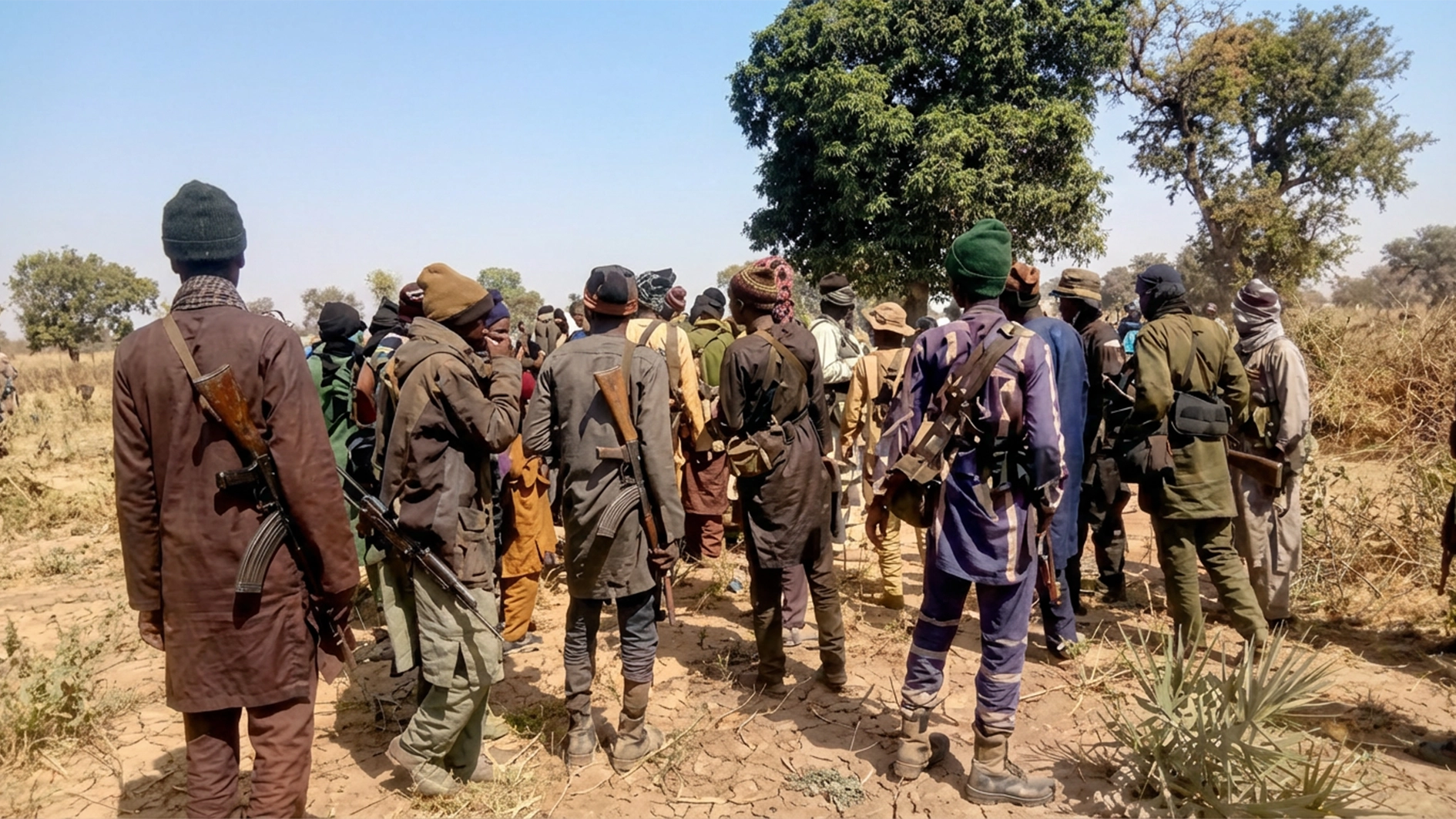
Between late June and early August 2026, more than 77 people were reported killed in bandit attacks across Sokoto State. In Sabon Birni Local Government Area alone, at least nine communities, including Tsamaye, Lajinge, Alkalawa and Unguwar Lalle, have been deserted. Men, women and children have trekked through the night towards Sabon Birni town, with many walking between 30 and 50 kilometres because vehicles were unavailable, while flooding cut the main road to Sokoto and stranded displaced families. During the attack on Tsamaye, as reported in the media, residents fleeing across a river drowned after their overloaded boats capsized, with women and children accounting for most of those swept away.
Sabon Birni is also not a distant abstraction to the Sokoto State Government. It is the local government area from which the Deputy Governor of Sokoto State hails and which he once administered. If the crisis has reached the doorstep of the state’s own leadership and still forced residents to flee on foot, farmers in the affected communities are entitled to ask what protection they can expect from government.
Why this raises serious governance concerns, and whose responsibility it is
Section 14(2)(b) of Nigeria’s Constitution states that the security and welfare of the people shall be the primary purpose of government. In Sabon Birni, the reality on the ground raises serious questions about how that constitutional responsibility is being discharged, as communities are repeatedly overrun, additional security personnel are announced, and the violence returns.
The gap is one of both presence and priority, as ural farming communities on the state’s edge continue to lack sufficient protection to secure their homes and livelihoods, while the safety of residents appears to receive less attention than the protection available to government officials and urban centres. The man in the video captured this frustration when he contrasted the safety of government officials and their children with villagers running for their lives.
The protection of citizens against armed groups is principally a federal responsibility involving the Office of the National Security Adviser (NSA), Defence Headquarters and the Nigerian Army. The Sokoto State Government is responsible for the governance of Sabon Birni and for coordinating support to citizens displaced by the violence. Neither tier of government should shift responsibility to the other while families are forced from their homes and left without adequate protection or support.
The second concern is communication gap
There is also a significant gap in communication between government and citizens. A functioning relationship requires citizens to be able to raise concerns and government to respond honestly and substantively. In Sabon Birni, citizens’ concerns are now reaching the wider public through a viral video because formal responses have not provided sufficient answers. Government statements have largely focused on security deployments, while the continued displacement of communities presents a different picture.
When government repeatedly announces action without showing citizens whether and how that action is improving their security, it weakens public confidence and reinforces the belief that speaking up will change little. The man from Unguwar Lalle has already reached that point. His appeal to God should therefore be understood as a warning about the growing distance between citizens and the state that has a constitutional responsibility to protect them.
What we are asking of the Federal Government
- Within 72 hours, order a sustained, adequately resourced military and security deployment to Sabon Birni and the surrounding affected local government areas, equipped with the personnel, armoured vehicles and logistics that the displaced residents have themselves requested, with the mandate to hold ground rather than react and withdraw.
- Direct the Office of the NSA and the Defence Headquarters to publish, within 14 days, a clear protection plan for Sokoto and the wider North West, with measurable prevention targets, so that safety is delivered as strategy rather than as episodic rescue.
- Ensure the National Assembly exercises its oversight duty by requiring the security agencies to account, in the open, for what was requested, what was delivered, and why the periphery of Sokoto remains unheld.
What we are asking of the Sokoto State Government
- Within 72 hours, formally register the displaced of Sabon Birni as internally displaced persons and activate a humanitarian response providing shelter, food, water and medical care, consistent with Nigeria’s National Policy on Internally Displaced Persons and its obligations under the African Union Convention for the Protection and Assistance of Internally Displaced Persons in Africa, to which Nigeria is a party.
- Immediately prioritise the reopening of the flooded road linking Sabon Birni to Sokoto, so that the displaced are not left stranded between armed groups behind them and floodwater ahead of them.
- Establish and name a dedicated coordination office for the crisis, and provide direct support to the families of those killed and of those who drowned while fleeing.
- Strengthen and properly resource community-level security, including the vigilante and local structures that residents themselves credited for what protection they had, in coordination with federal forces.
What we are asking of you both, together
Speak to these citizens honestly and in person. A visit, a townhall, a direct and truthful account of what the government can and cannot yet do, would begin to repair a trust deficit that silence has deepened. Publish a formal response to the specific demands in this letter within seven days.
Our commitment
ImpactHouse will document and responsibly amplify the testimonies of the displaced, track the response to the demands in this letter, and publish, without partisanship, a record of what is delivered and what is not. We extend an open offer of partnership to both governments in designing honest, two-way communication with affected communities, because the restoration of citizen trust is itself a governance task, and it is the task we exist to serve.
Your Excellencies, a citizen of this country has asked God to punish his government because he no longer believes the government will answer him. The most consequential response either of you can give is to prove him wrong, not with words alone, but with protection, assistance, and the honesty that the office you each hold demands.
Yours in the service of citizens,
John Andah
Executive Director
ImpactHouse Centre for Development Communication