Abuja, Nigeria: 26 March, 2026
ImpactHouse Centre for Development Communication joins a coalition of 15 civil society organisations (CSOs) in calling on relevant Nigerian authorities to address the unresolved legal, financial, and ethical obligations surrounding the appointment of Senator Jimoh Ibrahim as Nigeria’s Permanent Representative to the United Nations.
We raise this matter as a question of institutional coherence, as Nigeria has a National Ethics and Integrity Policy (NEIP) and a National Values Charter, both of which were developed through deliberate, multi-agency processes and approved at the highest level of government. These instruments, which impose binding obligations on public officials, exist precisely because Nigeria’s credibility depends on how it treats those obligations when the stakes are highest.
And the stakes are high now, as over 300 workers remain unpaid, with a National Industrial Court judgment of N1.5 billion upheld on appeal. A N69.4 billion judgment debt to Nigerian taxpayers sits unrecovered, with AMCON on record describing the debtor as ‘recalcitrant’. A 10-count criminal charge for alleged tax evasion and the forging of tax clearance certificates is pending before a Federal High Court. These are allegations already verified, adjudicated, and in several instances repeatedly confirmed by Nigerian courts. What is still awaited is enforcement.
As an organisation that exists to close the gap between what public policy says and what actually reaches citizens, the question before us today is whether Nigeria’s integrity framework applies to those who hold power, not just those who seek to hold it to account.
Given that an ambassador is a living expression of what Nigeria chooses to project internationally, sending an individual with unresolved criminal proceedings, outstanding court judgments, and documented obligations to workers and the state to represent the country at the United Nations communicates, with precision, that these obligations are negotiable for those with access to the right networks. That communication reaches Nigerian citizens and foreign audiences with equal clarity.
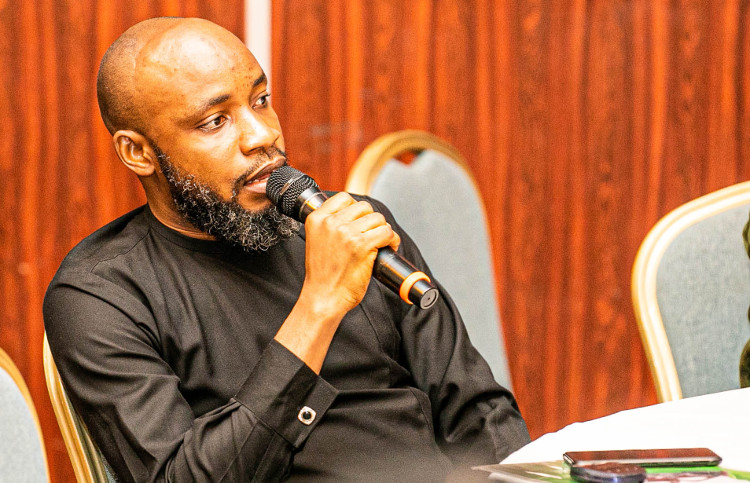
A country that enacts a values framework and then exempts its own appointees from it has demonstrated the exact condition the framework was designed to cure, said ImpactHouse Executive Director, John Andah.
We call on the Office of the Secretary to the Government of the Federation, the ICPC, the Nigeria Revenue Service, AMCON, and the Central Bank of Nigeria to provide transparent, time-bound public reports on the enforcement status of all outstanding obligations in this matter. We further call on the Presidency to issue clear criteria for the vetting of diplomatic appointees, including verification of pending criminal proceedings, court judgments, and tax compliance, and to make those criteria public.
Nigeria’s credibility at the United Nations begins with its credibility at home, and accountability is the standard we demand of those who hold it.
###